

WTI near $89 shows divided pricing between Iran-deal hope and war risk
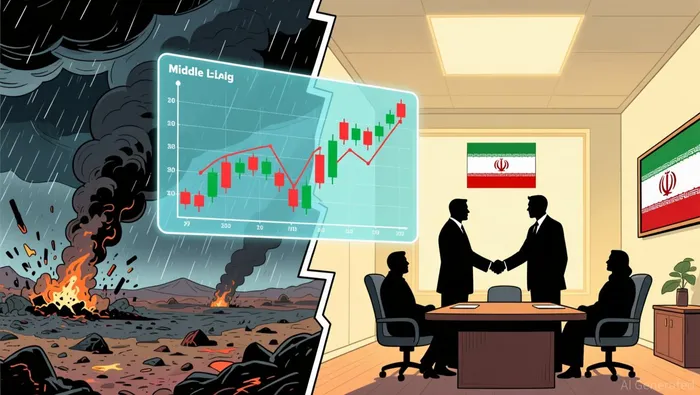
WTI is trading around $89.00 during Asian hours after falling almost 6% to settle below $89 a barrel. That tells you the market is split: deal hopes are pulling prices down, while Middle East tension is still keeping a war premium alive.
The bullish case remains in play because markets are still weighing scenarios tied to $150 if Lebanon escalation keeps damaging confidence in regional supply routes. The bearish case is equally clear: diplomatic chatter around the U.S. and Iran still points to the chance of a deal that could ease supply constraints in an already sorely undersupplied oil market.
Why trader hesitation matters
This is not a straightforward crash trade. Trend-following commodity trading advisers shifted their positioning on WTI from 82% long to 55% long, and traders also showed reluctance to buy this dip. That leaves the market vulnerable to sharp moves in either direction: weak demand for higher prices can let headline-driven selling run, but a fresh flow shock could still move the market harder than normal because positioning is no longer fully stretched bullish.
The next move likely hinges on diplomacy
The immediate catalyst is diplomatic. Trump said the U.S. and Iran will probably meet for a second round of talks, even as he said he was "not satisfied" with talks to end the almost three-month war. If those talks start to look productive, the risk premium can keep getting squeezed. If they stall and Lebanon keeps deteriorating, traders may start funding disruption risk again.
Southern Lebanon is becoming more than a headline risk for oil
One key mechanism still matters: southern Lebanon is not just making headlines. It is becoming a functional barrier to normal activity in the region.
A ceasefire on paper, a no-go zone on the ground
Israel published a map of an occupied buffer zone covering nearly 600 square km in southern Lebanon, along with evacuation orders for 57 towns and villages. The bombing then expanded well beyond that area, with more than 120 air strikes on Tuesday alone. For oil markets, the point is simple: traders do not need full-scale regional war to price a flow disruption. They need evidence that the ceasefire is not restoring normal control.
Why traders still care about the Lebanon front
The market has already shown how sensitive it is when violence in Lebanon looks persistent. On a prior stretch of escalation, U.S. crude oil surged above $100 before pulling back. The trigger was not only the fighting itself. It was the realization that Iran was limiting traffic through the Strait of Hormuz and that the strait has not opened to ships. In that read-through, Lebanon escalation started feeding directly into the choke point investors fear most: Hormuz.
The flow test from here
If Israel keeps deepening its operations in Lebanon and Hezbollah continues escalating drone attacks, the ceasefire will stay fragile. And if Hormuz remains constrained, Lebanon stops looking like a side front and starts looking like a signal that the broader shipping environment is still at risk of tighter passage, higher insurance costs, and slower barrel movement.
The practical watchpoint is simple: watch ships, not speeches. As long as vessels must obtain its permission to pass through Hormuz, fresh escalation in southern Lebanon can still travel through the shipping route and hit oil pricing.
What would confirm the bullish or bearish oil setup next?
Here the trade becomes fairly mechanical: price is either confirming flow risk, or confirming that diplomacy is absorbing it.
Bullish setup
If WTI retests the above-$100 zone and fails to break higher, that is not bullish by itself. It is a volatility test. What turns it bullish is what happens next: if the market can hold near the $97.87 per barrel close or push back through the high-$90s while Iran still has not opened the strait to ships, traders are choosing to own flow risk again despite the headline fear.
Watch three things: - Does price stay firm after the 10-day ceasefire, even with reported ceasefire violations? - Does Israel keep deepening its operations in Lebanon, keeping the buffer-zone risk real? - Does Hormuz stay constrained, with vessels must obtain its permission to pass?
If those answers remain yes, the war premium is still supporting the tape.
Bearish setup
The bear case is simpler: a live diplomatic window can crush the risk premium quickly. Trump said the U.S. and Iran will probably meet for a second round, and he also expressed optimism about the possibility of progress. If those talks produce visible results, the market can start pricing reopened Iranian supply into an already sorely undersupplied oil market.
What would invalidate each read
The cleaner invalidation for the bull case is a durable truce plus evidence that Hormuz is normalizing. The cleaner invalidation for the bear case is no deal, plus another spike that sends WTI back toward the $100 area. Until one of those happens, this remains a headline-driven market.